
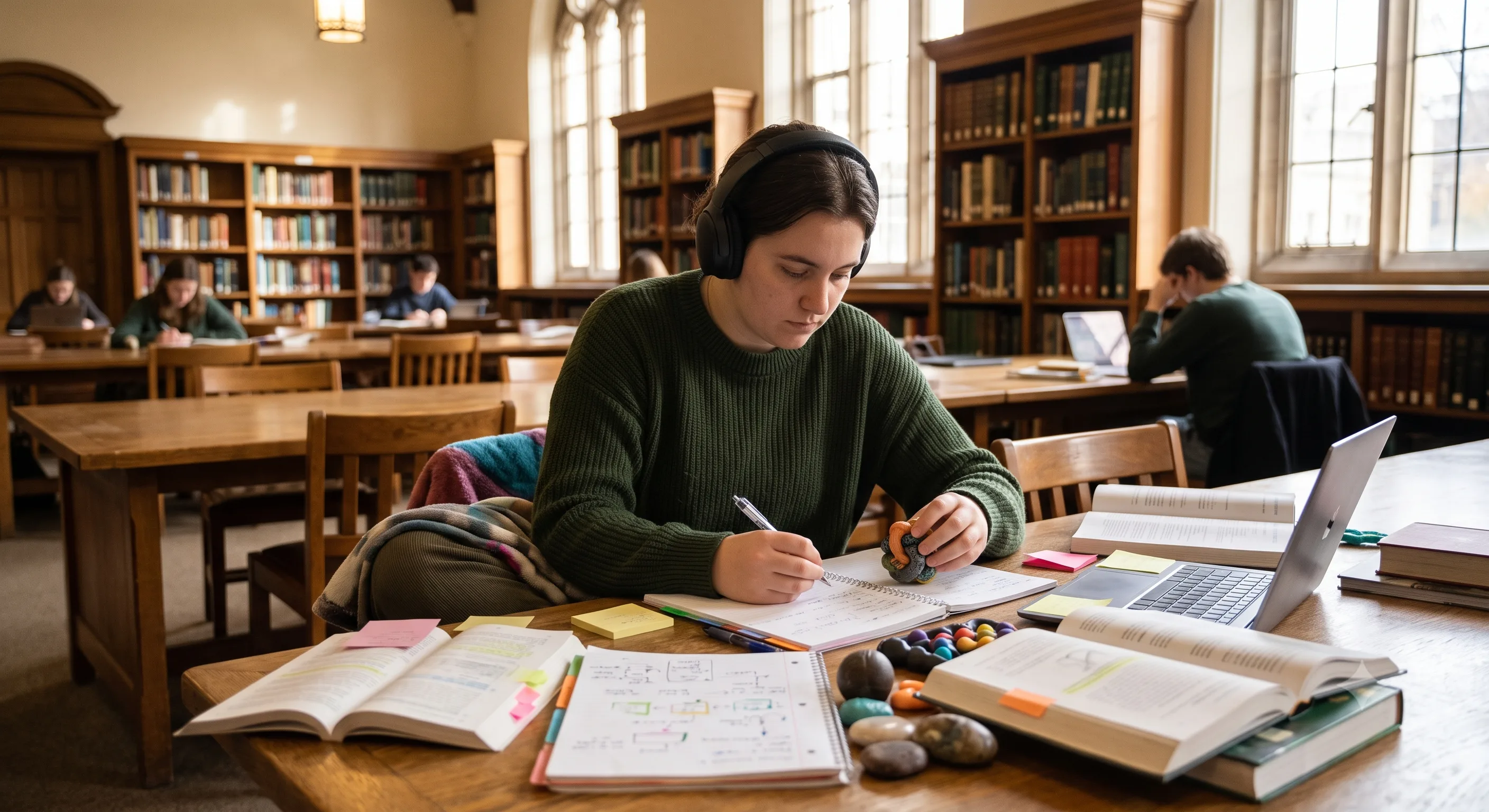
What it means
Conditions like autism, ADHD, dyslexia and others are natural variations, not problems to be fixed.
About neurodiversity
Neurodiversity is the simple idea that people think, learn and process the world in different ways. At TUM, thousands of students are neurodivergent, and small changes to how campus works can make a real difference for all of us.
View projectsThe word was coined in the late 1990s by sociologist Judy Singer, who is autistic herself. It reframed conditions like autism and ADHD as natural variation in the human brain, similar to biodiversity, rather than as disorders to be cured. That shift from a medical view to a social one is why we talk about environments that help or hinder, not just diagnoses.
What it means, and what helps
Conditions like autism, ADHD, dyslexia and others are natural variations, not problems to be fixed.
Deep focus, pattern-spotting, creativity and honesty. Neurodivergent students bring a lot to TUM.
Often it's the environment, not the person: noise, harsh light, unclear expectations, rigid schedules.
A few common examples
Many people identify with more than one, and every experience looks different.
Differences in communication, sensory processing and focus, often including deep interests and a strong eye for detail.
Differences in attention, impulse control and activity level, which can bring bursts of high energy and creative thinking.
Differences in processing written language or numbers, often paired with strong verbal or spatial reasoning.
Differences in coordination and motor planning that can affect handwriting, driving or organizing daily tasks.
Involuntary movements or sounds called tics, which can vary widely in type and intensity over time.
Recurring intrusive thoughts and the urge to repeat certain actions to ease the anxiety they cause.
Personal perspectives, in their own words
Three short talks from neurodivergent speakers, on diagnosis, daily life, and what actually helps.
Elisabeth Wiklander · TEDxGöteborg
TEDx talk
TEDx talk
To learn more or get direct support
A few places to learn more or get direct support, at TUM and beyond.
TUM's advising service for students with disabilities or chronic illness.
Resources on autism, rights and everyday life, by and for autistic people.
Information, self-help groups and advice for people with ADHD.
Guidance on dyslexia and dyscalculia for students and educators.